
Home / About Us

PBS Supervision Australia was established to provide high-quality, structured supervision and consultancy for Positive Behaviour Support (PBS) practitioners and NDIS Behaviour Support providers operating in complex, high-risk, and highly regulated environments.
The service is grounded in ethical, least-restrictive practice, capability development, and defensible clinical reasoning. Supervision and consultation are delivered in line with the NDIS PBS Capability Framework and relevant NDIS Practice Standards, with a strong emphasis on reflective practice, professional growth, and real-world application.
PBS Supervision Australia works with both individual practitioners and organisations, supporting endorsement readiness, portfolio development, complex case formulation, and provider governance, while recognising the practical realities of frontline behaviour support work.
Psychologist & Advanced Behaviour Support Practitioner
PBS Supervision Australia is led by Anthony Angiolino, Psychologist and Advanced Behaviour Support Practitioner.
Anthony has worked across behaviour support and psychological intervention for several years, beginning his career with a small NDIS provider and progressing alongside the organisation as it grew into a large, multidisciplinary service. During this time, he developed extensive experience in provider growth, workforce development, and organisational governance, ultimately managing a multidisciplinary team comprising Behaviour Support Practitioners, Psychologists, Occupational Therapists, and Speech Pathologists.
This trajectory has provided Anthony with a strong understanding of the distinct challenges faced by both small and large providers, including team structure, supervision frameworks, compliance demands, and sustainable service delivery.

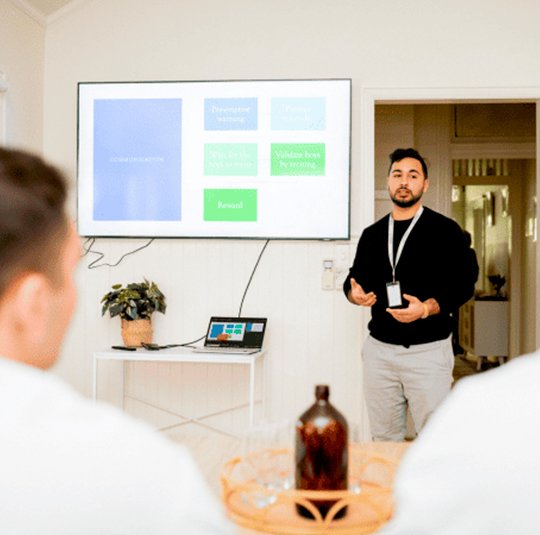
Anthony has worked with an extremely heterogeneous cohort of participants across the lifespan. His early clinical work focused predominantly on psychosocial disability, including individuals with psychotic disorders, and regularly involved collaboration with forensic services, psychiatric teams, and acute mental health systems.
As his practice evolved, Anthony gained extensive experience working with neurodivergent and neurological presentations, including Autism Spectrum Disorder, ADHD, Acquired Brain Injury, Intellectual Disability, genetic conditions, and neurodegenerative disorders such as dementia and Alzheimer’s disease. He has supported behaviour support across a broad range of Behaviours of Concern, including aggression, withdrawal, absconding, sexualised behaviours, food-related behaviours, and hygiene-related behaviours, and has a well-developed, practical understanding of restrictive practices, including assessment, reduction, governance, and reporting.
In addition to his behaviour support work, Anthony now practices in private psychological practice, providing assessment and intervention with a strong focus on neurodivergence. This includes cognitive assessment and diagnostic assessment for ASD, ADHD, and Specific Learning Disorders, as well as psychological intervention targeting emotional regulation, social development, and functional skill-building. This contemporary assessment and intervention work directly informs his supervision practice, supporting a nuanced understanding of how diagnostic profiles, cognitive differences, and psychological factors influence behaviour, and how interventions can be tailored to address underlying clinical needs.
Since establishing PBS Supervision Australia, Anthony has developed a working knowledge of restrictive practices legislation across all Australian jurisdictions, with particular attention to state-based requirements for regulated restrictive practices.
His supervision approach is reflective, structured, and capability-focused, recognising that clinicians are experts in their own practice while providing thoughtful guidance, collaboration, and support aligned with NDIS core competencies. The focus is on building confidence, ethical decision-making, and sustainable practice across both individual clinicians and organisations.